
Import vs Domestic Sourcing of Chemicals: The Real Cost, Risk and Compliance Comparison

Key Takeaways
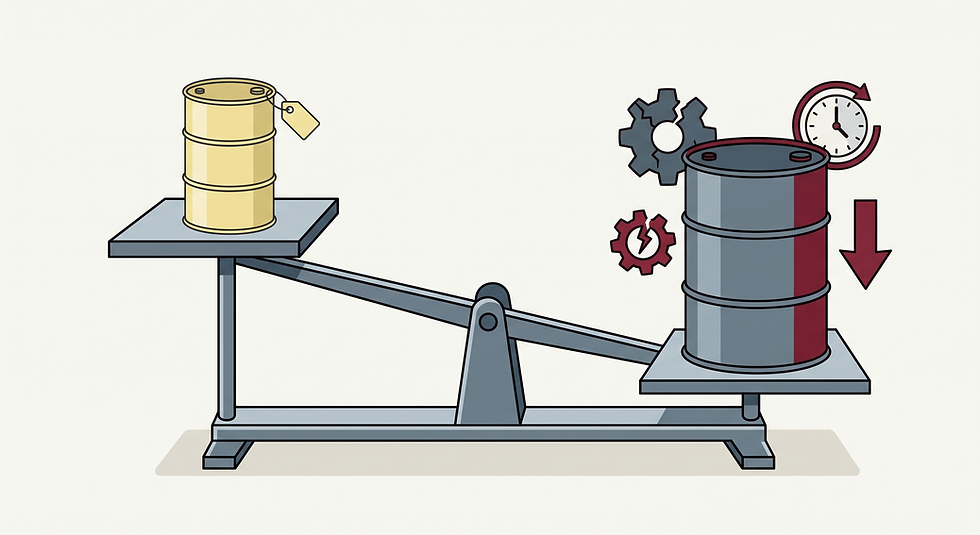
Import vs domestic is not a one-time company policy decision — it is a per-SKU calculation that changes every time BIS notifies a new Quality Control Order, DGTR imposes a new anti-dumping duty, or a domestic producer adds capacity.
Landed cost of an imported chemical typically runs 18–35% above FOB price once basic customs duty, IGST, freight, insurance, port handling, CHA fees and inland transport are added — before any anti-dumping duty is factored in.
Mandatory BIS certification now covers a growing list of industrial chemicals (orthophosphoric acid, polyphosphoric acid, linear alkyl benzene, ethylene dichloride and specific polymers among them), and importing an uncertified regulated chemical can mean shipment seizure at port, not just a fine.
Anti-dumping duties on chemicals from China, Japan, the EU and elsewhere are active and expanding — recent duties have ranged from roughly $75 to over $2,000 per tonne depending on the chemical, and a duty can appear mid-contract via a DGTR investigation you did not know was underway.
Domestic sourcing wins on lead time, working capital, INR-denominated payment terms and regulatory simplicity, but can lose on price for globally commoditized chemicals where India lacks scale capacity.
The most resilient procurement strategy for most mid-size Indian buyers is dual-sourcing by design — a qualified domestic backup vendor for every import-dependent SKU, and vice versa — not a binary import-or-domestic policy.
Quality documentation expectations differ structurally: imported chemicals need BIS/AIR paperwork and import-specific CoA/MSDS reconciliation at customs, while domestic sourcing shifts the QA burden toward vendor consistency audits and batch-to-batch reliability.
Introduction
Every procurement head running a chemical sourcing desk in India eventually asks the same question about a given raw material: buy it from an overseas supplier, or qualify a domestic vendor? The honest answer is that this is rarely a single decision made once and left alone. It is a live calculation that shifts every time a new BIS Quality Control Order is notified, an anti-dumping duty lands on your HS code, a domestic producer commissions new capacity, or a shipping lane gets disrupted. This guide lays out the real comparison — landed cost mechanics, the regulatory layer that has expanded significantly for chemical imports in 2026, documentation and QA differences, and a practical decision framework — so that the choice is made SKU by SKU with actual numbers, not on the basis of “imports are cheaper” or “domestic is safer,” both of which are true only sometimes.
1. Why This Isn't a One-Time Decision
Three things change constantly enough that a sourcing decision made twelve months ago deserves a fresh look today: regulatory status (a chemical can move onto the BIS mandatory certification list or acquire an anti-dumping duty with little warning), domestic capacity (Indian chemical manufacturing has been adding capacity across specialty and commodity segments, changing the competitive price point over time), and logistics reality (freight rates, port congestion and geopolitical shipping disruptions swing landed cost by meaningful margins within a single year). Treating import vs domestic as a policy set once during vendor onboarding, rather than a parameter reviewed at each purchase cycle, is the single most common source of margin leakage in chemical procurement.
2. The Real Landed Cost of an Imported Chemical
FOB price is the number on the supplier's proforma invoice. It is not the number that determines whether the import made financial sense. A realistic landed cost build-up for a bulk industrial chemical imported into an Indian port looks like this:
Cost Element | Typical Range | Notes |
FOB / Ex-works price | Base | Supplier's quoted price at origin |
Ocean/air freight | 3–10% of FOB | Varies sharply by lane, container availability, and season |
Marine insurance | 0.3–0.6% of CIF value | Mandatory for most commercial import contracts |
Basic Customs Duty (BCD) | 0–17.5% of CIF, chemical-specific | Rate depends on HS code; many bulk chemicals sit in the 5–10% band, some specialty items higher |
IGST | 18% (standard) or 5%/12% for specific categories | Charged on CIF value + BCD; creditable against output GST for most industrial buyers |
Anti-dumping / safeguard duty (if applicable) | $75–$2,000+ per tonne on affected chemicals | Chemical- and origin-specific; can apply retroactively from investigation date in some cases |
Port handling, CFS/ICD, CHA fees | 1–3% of CIF | Customs house agent fees, terminal handling, documentation charges |
Demurrage/detention risk | Variable, can be significant | Triggered by BIS/customs clearance delays, documentation mismatches, or port congestion |
Inland freight to warehouse | 1–4% of CIF | Depends on port-to-warehouse distance |
Adding these up, a landed cost of 18–35% above FOB is a reasonable planning range for a standard industrial chemical import with no anti-dumping exposure. Where an anti-dumping duty applies, the effective landed cost premium can be materially higher — recent Indian anti-dumping duties on chemicals such as trichloro isocyanuric acid, insoluble sulphur, sulphenamides accelerators and acetonitrile have ranged from roughly $75 to over $2,000 per tonne depending on the chemical and country of origin, which can single-handedly erase an import's price advantage over a domestic alternative.
3. The Real Cost of Domestic Sourcing
Domestic sourcing looks simpler on paper — ex-factory price plus GST plus freight — but the comparison needs the same rigor applied to hidden costs on the domestic side:
• GST is fully creditable for most industrial buyers, so it is largely cost-neutral versus IGST on imports for a GST-registered manufacturer, unlike BCD which is a genuine cost.
• Domestic freight is typically far cheaper and faster than ocean freight plus port handling, and carries none of the demurrage/detention risk profile of an import shipment stuck in customs.
• Payment terms are usually INR-denominated with standard credit periods (30–90 days), avoiding the working capital lock-up of an LC or advance payment structure common in import trade.
• The hidden domestic cost is vendor concentration risk and batch consistency — a single-source domestic supplier with capacity or quality issues can disrupt production with far less warning than a well-managed import pipeline with safety stock.
• For chemicals where India has limited manufacturing scale (certain fine chemicals, specialty intermediates, or feedstocks tied to petrochemical crackers India does not operate at scale), domestic price can carry a real premium over landed import cost even after duties — this is a structural, not cyclical, gap.
4. The Regulatory Layer: BIS, QCOs and the Authorized Indian Representative
Mandatory BIS certification has expanded significantly into industrial chemicals through 2026, and this is the single biggest compliance change procurement teams sourcing internationally need to track. Chemicals brought under Quality Control Order coverage in the recent notification cycle include orthophosphoric acid, polyphosphoric acid, linear alkyl benzene (LAB), ethylene dichloride, and a growing list of specific polymers and chemical intermediates, with enforcement dates staggered through the year.
4.1 What a QCO Means Practically for an Importer
• A foreign manufacturer exporting a QCO-covered chemical into India must appoint an Authorized Indian Representative (AIR) and obtain a BIS certificate demonstrating conformity to the applicable Indian Standard before the shipment can clear customs.
• Customs authorities check for valid BIS certification at the point of clearance — a shipment without it faces seizure, return, or destruction, not merely a penalty, and demurrage accrues throughout any dispute.
• The certification process typically takes 6–16 weeks depending on the product and testing requirements, which means a QCO notification with a near-term enforcement date can strand an import order already in transit if the supplier has not proactively certified.
4.2 What This Means for Sourcing Decisions
Before finalizing an import order for any industrial chemical, checking current BIS QCO coverage for that specific chemical and HS code is now a mandatory first step, not a formality. A chemical that was freely importable eighteen months ago may require AIR-mediated BIS certification today, and the list continues to expand. This regulatory trajectory is also, in effect, a policy nudge toward domestic sourcing or domestic manufacturing partnerships for chemicals where BIS compliance becomes commercially burdensome for smaller overseas suppliers who decline to pursue Indian certification.
5. Anti-Dumping Duty: The Risk That Changes Mid-Contract
Anti-dumping duty is the most underestimated risk in import-based chemical sourcing, precisely because it can appear after a sourcing relationship is already established. India's Directorate General of Trade Remedies (DGTR) actively investigates and recommends duties on chemical imports where a domestic manufacturer files a complaint alleging injury from underpriced imports — and recent cases illustrate both the scale and the breadth of chemicals affected.
Chemical | Origin Countries | Recent Duty Range |
Trichloro isocyanuric acid (water treatment) | China, Japan | Up to ~$986/tonne (provisional recommendation ~$170–$870/tonne) |
Sulphenamides accelerators (rubber/tyre) | China, EU, US | $75–$1,748/tonne |
Acetonitrile (pharma solvent) | China, Russia, Taiwan | Up to $481/tonne |
Insoluble sulphur (tyre industry) | China, Japan | Up to ~$358/tonne |
PEDA (herbicide intermediate) | China | $1,305–$2,018/tonne |
Vitamin A Palmitate | China, EU, Switzerland | Up to ~$21/kg equivalent |
The pattern across these cases is consistent: a domestic manufacturer files a complaint with DGTR, an investigation runs for several months to over a year, and if injury is established, the Ministry of Finance notifies a duty that typically runs for five years. A buyer with a multi-year import contract and no visibility into pending DGTR investigations on their HS codes can find landed cost economics shift substantially with limited notice. Checking active and pending DGTR investigations for your specific chemical category before committing to long-term import contracts is a basic risk-management step that is frequently skipped.
6. Quality Assurance and Documentation: Two Different Disciplines
The QA burden does not disappear with either sourcing choice — it changes shape.
6.1 Import QA Discipline
Reconciling the overseas CoA/MSDS against Indian regulatory requirements, including BIS-mandated testing where applicable, rather than assuming the supplier's home-market documentation is automatically acceptable in India.
Building in time and cost for third-party pre-shipment inspection or port-of-entry sampling, particularly for chemicals with tight assay or impurity specifications where a rejected shipment is expensive to reroute.
Maintaining an Authorized Indian Representative relationship and BIS certification renewal calendar for any QCO-covered chemical in the sourcing mix.
6.2 Domestic QA Discipline
Batch-to-batch consistency auditing becomes the primary QA lever, since domestic suppliers vary more in process control maturity than large, audited overseas producers serving multiple export markets.
Vendor concentration risk assessment — how many qualified domestic sources exist for this chemical, and what is the real switching cost if the primary vendor has a production outage.
On-site audits are logistically far easier and cheaper to conduct domestically, which is a genuine QA advantage — a same-day or overnight factory visit versus an international audit trip.
7. Lead Time, Working Capital and Inventory Economics
Factor | Import | Domestic |
Typical lead time | 4–10 weeks (production + shipping + customs) | 1–3 weeks |
Safety stock requirement | Higher — typically 6–12 weeks of cover to buffer shipping and customs variability | Lower — typically 2–4 weeks of cover |
Payment structure | Often advance payment or LC, tying up working capital ahead of delivery | Standard credit terms (30–90 days) common |
Currency exposure | Real — INR depreciation directly raises landed cost on unhedged contracts | None |
Disruption risk profile | Shipping lane disruptions, port congestion, customs delays, geopolitical events | Domestic logistics disruption, single-vendor production outage |
The working capital difference is often underweighted in a pure landed-cost comparison. An import order requiring 30% advance payment and a 10-week lead time locks up capital for far longer than a domestic order on 45-day credit terms with a 2-week lead time — and that capital cost belongs in the total cost of ownership, not just the unit price comparison.
8. A Practical Decision Framework
For a given chemical SKU, five questions determine whether import or domestic sourcing is the stronger choice this quarter:
Is this chemical BIS QCO-covered for import? If yes, confirm the overseas supplier already holds or is willing to pursue AIR-mediated BIS certification before committing — otherwise domestic becomes the only low-risk near-term option.
Is there an active or pending DGTR investigation on this HS code and origin country? Check before signing multi-year contracts; a pending case is a material pricing risk even before any duty is formally notified.
What is the true landed cost including duty, working capital cost and safety stock carrying cost, not just FOB plus freight? Build the full stack in Section 2 rather than comparing FOB to ex-factory price directly.
Does India have credible manufacturing scale for this chemical? Some chemicals are structurally cheaper to import because Indian capacity does not exist at competitive scale; others are structurally cheaper domestically because feedstock and energy costs favour local production.
What is the switching cost if the primary source fails? A qualified backup vendor — domestic backup for an import-primary SKU, or vice versa — is cheaper insurance than most buyers assume, and dramatically reduces single-point-of-failure risk.
9. The Hybrid Strategy: Dual-Sourcing by Design
For most mid-size Indian chemical manufacturers and traders, the resilient answer is neither “import everything” nor “source domestically everything” — it is maintaining a qualified alternate source, in the other category, for every commercially significant SKU. This means an import-primary chemical should have at least one BIS-compliant or QCO-exempt domestic backup vendor identified and lightly qualified even if not actively used, and a domestic-primary chemical should have an overseas backup identified with landed cost pre-calculated, so that a switch — triggered by a new anti-dumping duty, a QCO enforcement date, a domestic vendor outage, or a shipping disruption — can happen in weeks rather than months. The qualification cost of a backup vendor is small relative to the cost of an unplanned supply interruption on a chemical feeding an active production line.
Frequently Asked Questions
Is importing chemicals into India always cheaper than domestic sourcing?
No. For globally commoditized chemicals with efficient overseas production scale, import can be cheaper even after duties. For chemicals where India has strong domestic capacity and the overseas chemical faces an anti-dumping duty or BIS certification burden, domestic sourcing is often both cheaper and lower-risk. The comparison must be run per chemical, not assumed.
How do I check if a chemical requires BIS certification for import?
Check the current Quality Control Order notifications from BIS and the relevant ministry (Ministry of Chemicals and Fertilizers for most industrial chemicals) against your specific HS code and product description. Coverage has expanded significantly and continues to expand, so a chemical's status should be reconfirmed at each major purchase cycle rather than assumed unchanged from a prior import.
Can an anti-dumping duty apply to a shipment already in transit?
Provisional anti-dumping duties can apply from the date of the DGTR's provisional recommendation in some cases, which is why checking for pending investigations before committing to long-lead-time import orders matters — a duty notified while goods are in transit can materially change landed cost with no opportunity to renegotiate the purchase price.
What is the single biggest hidden cost in import sourcing that buyers underestimate?
Working capital cost tied to advance payment or LC terms combined with longer safety stock requirements. Unit price comparisons frequently ignore that capital locked up for 10–12 weeks on an import order has a real cost that domestic 30–45 day credit terms avoid entirely.
Conclusion
Import versus domestic sourcing of chemicals is not a strategic stance a company adopts once — it is an operating decision that should be revisited at the SKU level, on a cycle tied to regulatory and market changes rather than habit. The regulatory layer for imports has genuinely thickened through 2026, with BIS Quality Control Orders expanding into core industrial chemicals and DGTR anti-dumping activity remaining consistently active across the chemical space. None of this makes import sourcing wrong; it makes the true landed cost, including compliance risk and working capital, the only honest basis for comparison. The procurement teams that come out ahead are the ones treating both channels as live options for every significant chemical, with a qualified backup in the other channel ready before they need it — not the ones who decided once and stopped checking.

Comments